About Belmullet
The history, geography, and character of Belmullet.
History & Heritage
The Mullet Peninsula and the lie of the land
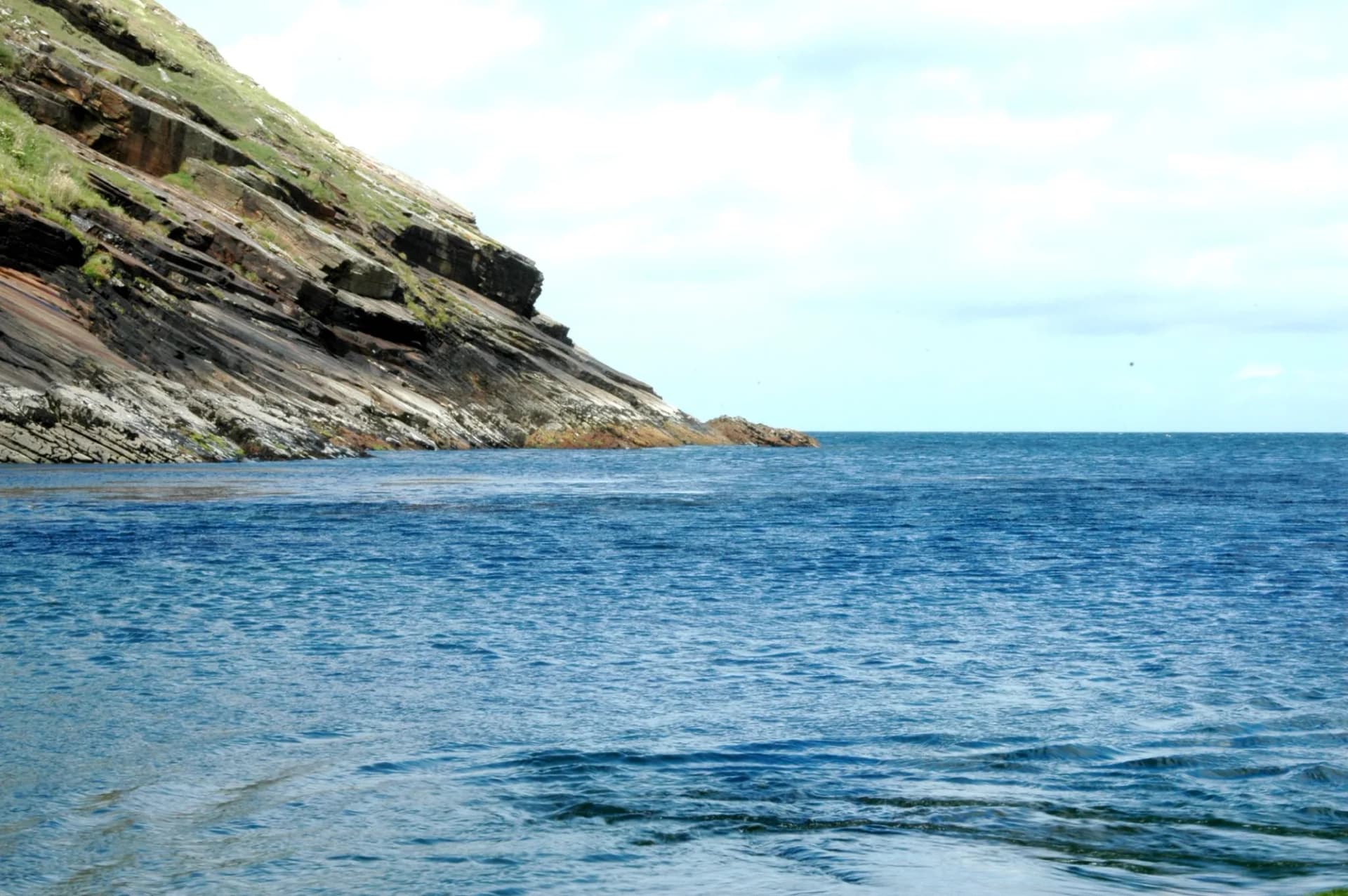
Belmullet sits at the join between the mainland and the Mullet Peninsula, a low spit of land that runs south for roughly thirty kilometres, sheltering Blacksod Bay from the open ocean on its eastern side while taking the full force of the Atlantic on its western shore. The contrast defines the place: calm, clear, sheltered water on one side, raw exposed coast on the other. The peninsula is not dramatic in the way of high mountains. It is mostly flat, an expanse of machair grassland, sand dunes, bog and small fields, broken by lakes such as Termoncarragh and Cross Lough. The drama comes at the edges, where the land meets the sea: at Erris Head in the north, at Doonamo Point with its blowhole and promontory fort, and at Annagh Head, whose rocks are among the oldest on mainland Ireland. From these headlands you look out at offshore islands, sea arches, and on a clear day the open ocean with nothing between you and North America. The Wild Atlantic Way runs the length of the peninsula, and Erris Head and Doonamo are both official discovery points on the route. Blacksod, at the southern tip, is the end of the road, with its square lighthouse and a pier where boats leave for the Inishkea Islands.
Carter's town, the canal, and the Famine
Belmullet as a town is younger than most in Ireland. It was laid out in the 1820s on land owned by William Henry Carter, who inherited huge tracts of Erris through marriage and set out to build a planned town between the two bays. He commissioned the Castlebar-born engineer Patrick Knight to design it, and the streets were laid out on a grid that is still legible today. A coastguard station had been built in 1822, and the town grew once a road reached the area in the mid-1820s. Carter's most ambitious project was a canal cut straight through the town, linking Blacksod Bay and Broadhaven Bay so that boats could pass from one to the other without rounding the headland. Work began in 1845. It was not finished until 1851, the delay caused by the Great Famine, which fell on Erris with terrible force. Erris was one of the poorest and most isolated districts in Ireland when the potato failed, and the suffering here was extreme. At the height of the Famine around three thousand people were recorded in the Belmullet workhouse. The region lost a huge share of its population to death and emigration, a wound that shaped Erris for generations and left the wider district thinly peopled to this day.
The Erris Gaeltacht and the Irish of Iorras
Belmullet is the capital of the Erris Gaeltacht, one of the Irish-speaking districts of Mayo. The town itself is largely English-speaking now, but it serves a hinterland of Gaeltacht villages on the Mullet Peninsula and in the surrounding parishes where Irish is still a living community language. The dialect spoken here belongs to the Connacht branch, with features particular to north Mayo. The Irish name for the town, Béal an Mhuirthead, means roughly the mouth of the Mullet, marking the point where the peninsula joins the mainland. The wider district is Iorras, anglicised as Erris, and you will hear it in place names and in the names of local organisations across the area. The language tradition feeds directly into the cultural life of the place. Féile Iorrais, the Erris international folk arts festival, draws on traditional music, dance, piping and storytelling, and the strong oral and musical heritage of the Gaeltacht runs through the pubs and the festival calendar.
The Land League and the working town today
Erris has a long history of agitation over land. The Land League, founded in 1879 in nearby Mayo, found ready support in a district where tenants had endured eviction, rack rents and the memory of the Famine. The campaign for tenant rights marked the beginning of the end for the old landlord system, and the legacy of that struggle is part of the identity of the area. Belmullet today is a working service town rather than a resort. It has the shops, schools, banks, the leisure centre and the hospital that the whole peninsula depends on, and it carries the GAA tradition that runs deep through Erris. The town is also a place of arrivals and departures: McDonnell's bar on Barrack Street doubles as the national bus stop, and Blacksod pier is the jumping-off point for the islands. In recent years Belmullet has built a quiet reputation as a base for the outdoors: walking at Erris Head, golf at Carne, surfing and kayaking off the Mullet, whale and dolphin watching in Broadhaven Bay, and boat trips to the deserted Inishkea Islands. It remains a long way from anywhere, and that is much of the point.
Wildlife & Nature
Marine Life
Humpback Whale
Humpback whales have been seen repeatedly off Erris Head and in Broadhaven Bay in recent years, with multiple individuals recorded feeding in the area in spring. The Irish Whale and Dolphin Group has logged sightings here, and land-based watching from the headlands can be rewarding when conditions are right.
May to September
Common Dolphin
Common dolphins travel the Erris coast in large numbers. The Irish Whale and Dolphin Group has recorded aggregations running into the hundreds off Erris Head and in Broadhaven Bay, sometimes feeding alongside whales. Boat trips out of Blacksod regularly encounter them.
May to September
Grey Seal
Grey seals haul out on the rocks and islands around the Mullet, with a notable colony on Duvillaun and seals seen throughout the Inishkea group. Sea safari boats from Blacksod include the seal colonies on their wildlife tours.
Year round
Minke Whale
Minke whales pass along the Erris coast through the summer and autumn, often seen from boats working the waters around the Inishkea Islands and the open Atlantic beyond.
June to October
Birdlife
Corncrake
The Mullet Peninsula is one of the last Irish strongholds of the corncrake, a secretive summer migrant whose rasping call comes from the meadows after dark. BirdWatch Ireland manages reserve land at Termoncarragh for the species, and calling males are recorded here most summers.
May to July
Barnacle Goose
Large flocks of barnacle geese winter on the Mullet, with Cross Lough and the surrounding machair among the best places to see them, alongside Greenland white-fronted geese.
October to April
Red-billed Chough
The red-billed chough, a glossy black member of the crow family with a curved red bill and red legs, breeds on the sea cliffs and feeds on the short coastal grassland of the peninsula.
Year round
Whooper Swan
Whooper swans winter on the shallow coastal lakes of the Mullet, with Termoncarragh Lake among the regular sites. The lake and machair are designated for their importance to wintering waterfowl and breeding waders.
October to March
Flora
Machair grassland
The Mullet Peninsula holds some of Ireland's best machair, a rare coastal grassland that forms on lime-rich windblown sand. In early summer it carries a dense carpet of wildflowers and supports breeding waders and corncrakes.
May to July