About Kilkenny
The history, geography, and character of Kilkenny.
History & Heritage
The Marble City
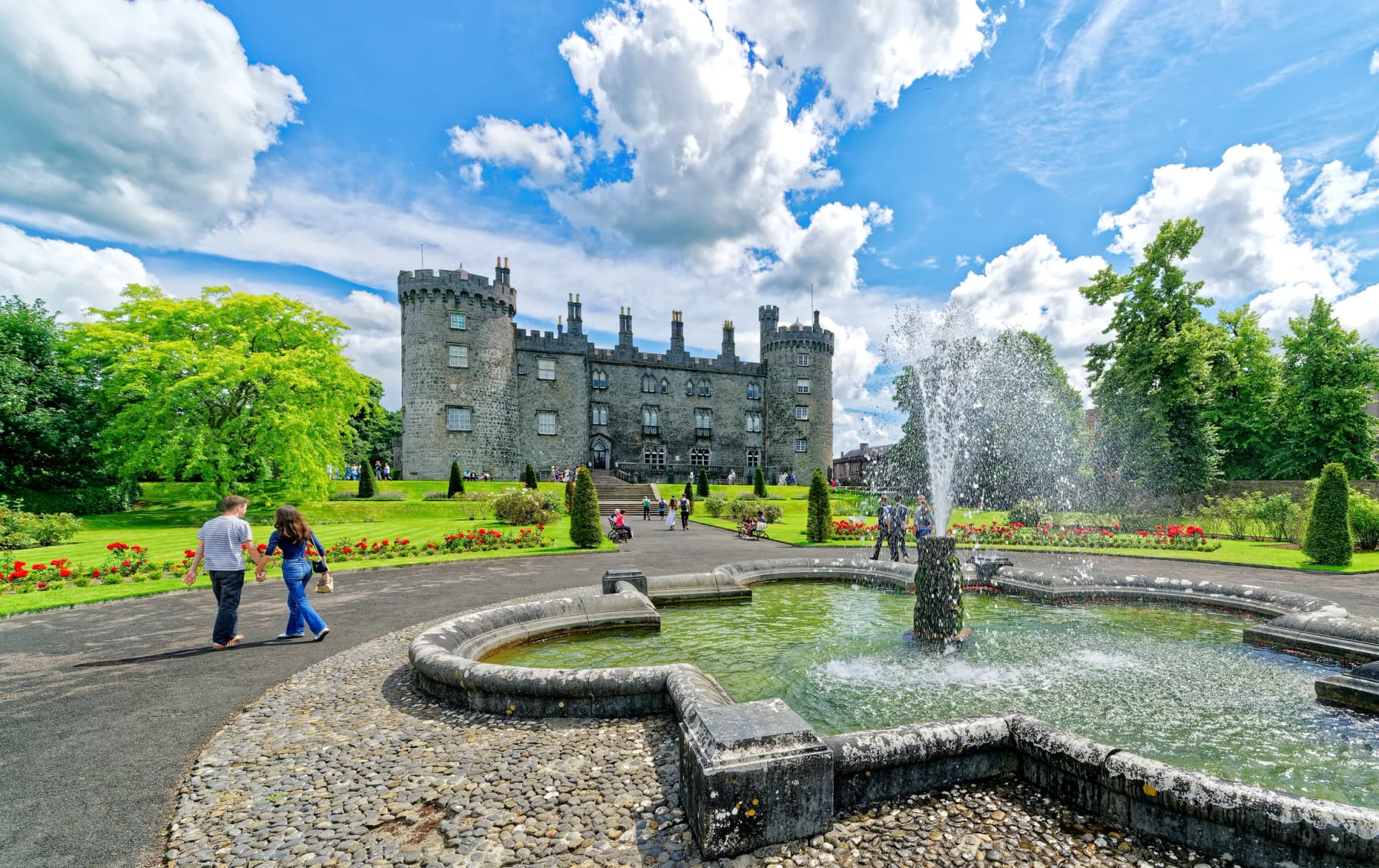
Kilkenny is built from the black carboniferous limestone quarried in the area, a stone so dense it takes a high polish and was long sold as Kilkenny marble. You see it in the castle walls, in St Canice's, in the Tholsel on High Street and in the doorsteps and fireplaces of the old townhouses. It is what gives the city its deep, wet, near-black sheen on a rainy day. The name Kilkenny itself comes from the Irish Cill Chainnigh, the church of Canice, after the sixth-century saint whose cathedral crowns the high ground to the north of the centre. The city grew up in the space between that church and the Anglo-Norman castle the Butlers, Earls and later Dukes of Ormonde, held for close to six hundred years until they handed it to the people of Kilkenny in 1967 for a token fifty pounds.
The Medieval Mile
The spine of the old city runs roughly a mile from Kilkenny Castle on the Parade up to St Canice's Cathedral and its round tower, and the route is dense with the things the city is known for. Along the way are the Tholsel, the old toll and customs house turned civic building; the Bull Ring, where the medieval market was held; Rothe House, a rare surviving Tudor merchant's townhouse complex with a restored garden; the Black Abbey, a Dominican priory founded in 1225; and the narrow slips, the medieval laneways like the Butter Slip that link the main streets. St Canice's round tower, built in the ninth century, is one of only two in Ireland you can still climb, 121 steps up to a view over the whole city. The Medieval Mile Museum, in the former St Mary's Church, anchors the route and tells the story of the people who built it.
Ireland's Craft and Design Capital
In 1965 the Irish state set up the Kilkenny Design Workshops in the crescent-shaped Georgian stable block opposite the castle, bringing in European-trained designers to lift the standard of Irish craft across silver, ceramics, weaving, textiles and woodwork. The Workshops closed in 1988, but the reputation stuck, and Kilkenny has been the country's craft and design town ever since. The National Craft Gallery, run by the Design and Crafts Council Ireland, occupies those same Castle Yard stables, and the Kilkenny Design Centre sells the work of Irish makers next door. The county is dotted with workshops you can visit: Nicholas Mosse spongeware in a restored flour mill at Bennettsbridge, Jerpoint Glass at Stoneyford, Cushendale Woollen Mills at Graiguenamanagh. Whatever you carry home from Kilkenny, someone nearby probably made it.
Hurling Country
Kilkenny is the most successful county in the history of hurling, with more All-Ireland senior titles than anyone else, and the game is woven into the identity of the place in a way that is hard to overstate. The county team are the Cats, and the colours are black and amber, which you will see on flags, shopfronts and bunting all over the city in summer. The county ground, known as Nowlan Park, fills to a black-and-amber sea on a championship Sunday. Club hurling matters just as much: the Kilkenny senior championship is fierce, and the parish rivalries run deep. For a visitor, a match at Nowlan Park is the most authentic local experience the city offers, but even off the pitch the game is everywhere, in the pub talk and the shop windows. Treat it with respect; this is identity, not a souvenir.
Wildlife & Nature
Marine Life
Atlantic salmon
The River Nore is one of Ireland's important salmon and trout rivers, running clear and fast through the centre of the city under John's Bridge and past the castle. Salmon run upriver from spring into summer, and the Nore is a designated conservation river for the species.
Spring and early summer
Freshwater pearl mussel
The Nore holds the rare Nore freshwater pearl mussel, a critically endangered subspecies found nowhere else in the world, which is part of why the river is a protected conservation area. You will not see it, but its presence is why the water is kept clean.
Year-round (protected; not for handling)
Birdlife
Kingfisher
Kingfishers work the quieter stretches of the Nore along the Canal Walk and the Lacken Walk, a flash of blue low over the water. Early morning on the riverside paths gives the best chance of one.
Year-round, best early morning
Grey heron
Grey herons stand sentinel along the Nore weirs and mill races through the city, especially around Lacken Weir and the old mill races on the Canal Walk. They are present all year and easy to spot.
Year-round