About Bourton-on-the-Water
The history, geography, and character of Bourton-on-the-Water.
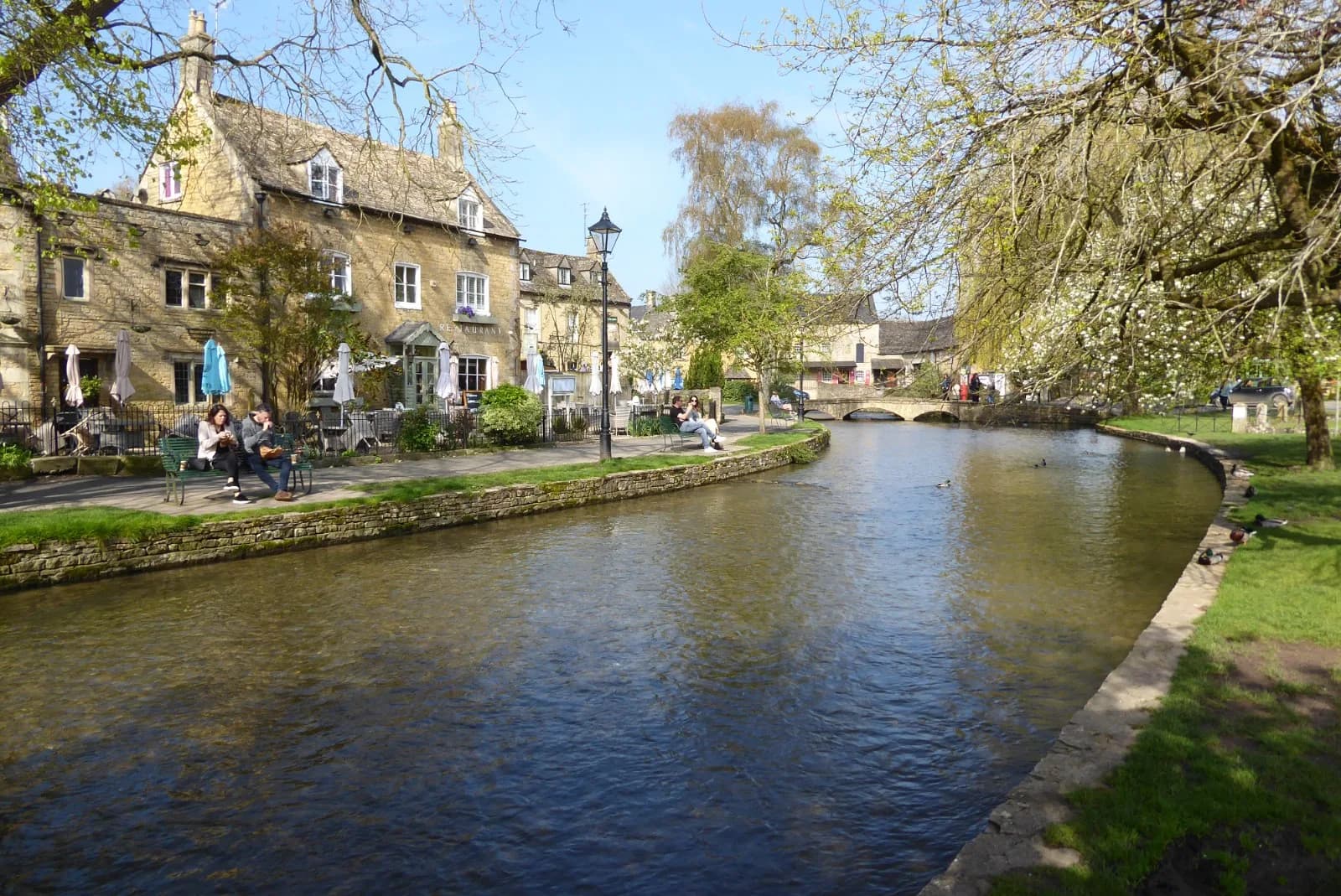
Bourton-on-the-Water is a village in the Cotswolds of Gloucestershire, in the valley of the River Windrush just east of the Fosse Way, and everyone who lives here calls it Bourton. The village visitor site counts some 4,000 residents. It is known for one thing above all: the Windrush runs right through the middle, beside the High Street, shallow and clear under five low stone bridges, and the village's byname, the 'Venice of the Cotswolds', comes from those bridges. Around the river are a Model Village, a bird park, a motoring museum and a lot of tea rooms, and on a sunny weekend a great many visitors; walk ten minutes out and you are in meadows that have been farmed and settled for thousands of years.
History & Heritage
The river and the mills
The village visitor site's history says the Windrush once ran across the meadows to the south, along what is now Letch Lane, and that by the early sixteenth century it had been channelled through the centre of the village to drive three mills. The river site adds that its average depth through Bourton is only about ten inches and that its springs kept it flowing even in the 1976 drought. The oldest of the five stone bridges in the centre is Mill Bridge, also called Broad Bridge, built in 1654 where a ford crossed; the latest is the Coronation footbridge opposite the Old New Inn, built in 1953 to replace a wooden bridge. The old mill at the top of the village, by Mill Bridge, is now the Motoring Museum.
Salmonsbury and the Fosse Way
On the eastern edge of the village is Salmonsbury Camp, a Neolithic and Iron Age site that is a Scheduled Monument, now part of Gloucestershire Wildlife Trust's Greystones Farm. The visitor site says Iron Age currency bars from about 300 BC found there are in the British Museum, and that the name Bourton comes from the Saxon words for a fort or camp and a settlement. The Roman Fosse Way passes on the west side of the village, and Bourton Bridge, which carries it over the Windrush, bears an inscription recording the crossing as 'Buruhford of Salmonsbury' in the eighth century.
The church and the manse
St Lawrence's Church stands on the site of a Saxon church recorded in the early eighth century. Its chancel was built in 1328, its tower in 1784 and its nave in the 1870s. The village was a nursery of nonconformism, the visitor site says, and its Baptists built a manse in the 1740s for their young minister, Benjamin Beddome, who served them for 55 years; the house is now the Old Manse Hotel by the river.
Pulhams and the visitors
Tourism here is older than the car. The visitor site says that when the railway reached Cheltenham, a Mr Pulham ran a horse-drawn charabanc to bring Midlanders over the hills to Bourton, and Pulhams still runs the village's bus. Bourton had its own station on Station Road until 1962. The landlord of the New Inn built the Model Village in his garden in the 1930s to draw visitors, and Birdland opened in 1957. Today the car parks fill on bank holidays, coaches are kept off the High Street, and the visitor site reminds people that the village has no opening hours and no entry fee because it is somewhere people live.
Wildlife & Nature
Birdlife
Mallards on the Windrush
Mallards are on the river through the village all year, and the village visitor site encourages visitors to watch the local ducks and look for the several species of fish in the clear water.
All year
Barn owls and swallows at Greystones
Gloucestershire Wildlife Trust says swallows and house martins use the old farm buildings at Greystones, along with owls and bats, and the village visitor site's Greystones page mentions a live camera on the barn owl box in the Discovery Barn.
Swallows and martins in summer; owls all year
Flora
Orchids in the Greystones meadows
The wildflower meadows at Greystones are a Site of Special Scientific Interest, and the village visitor site says early marsh, southern marsh and common spotted orchids may be seen in May and early June.
May and early June