About Dungarvan
The history, geography, and character of Dungarvan.
History & Heritage
A Castle at the Mouth of the River
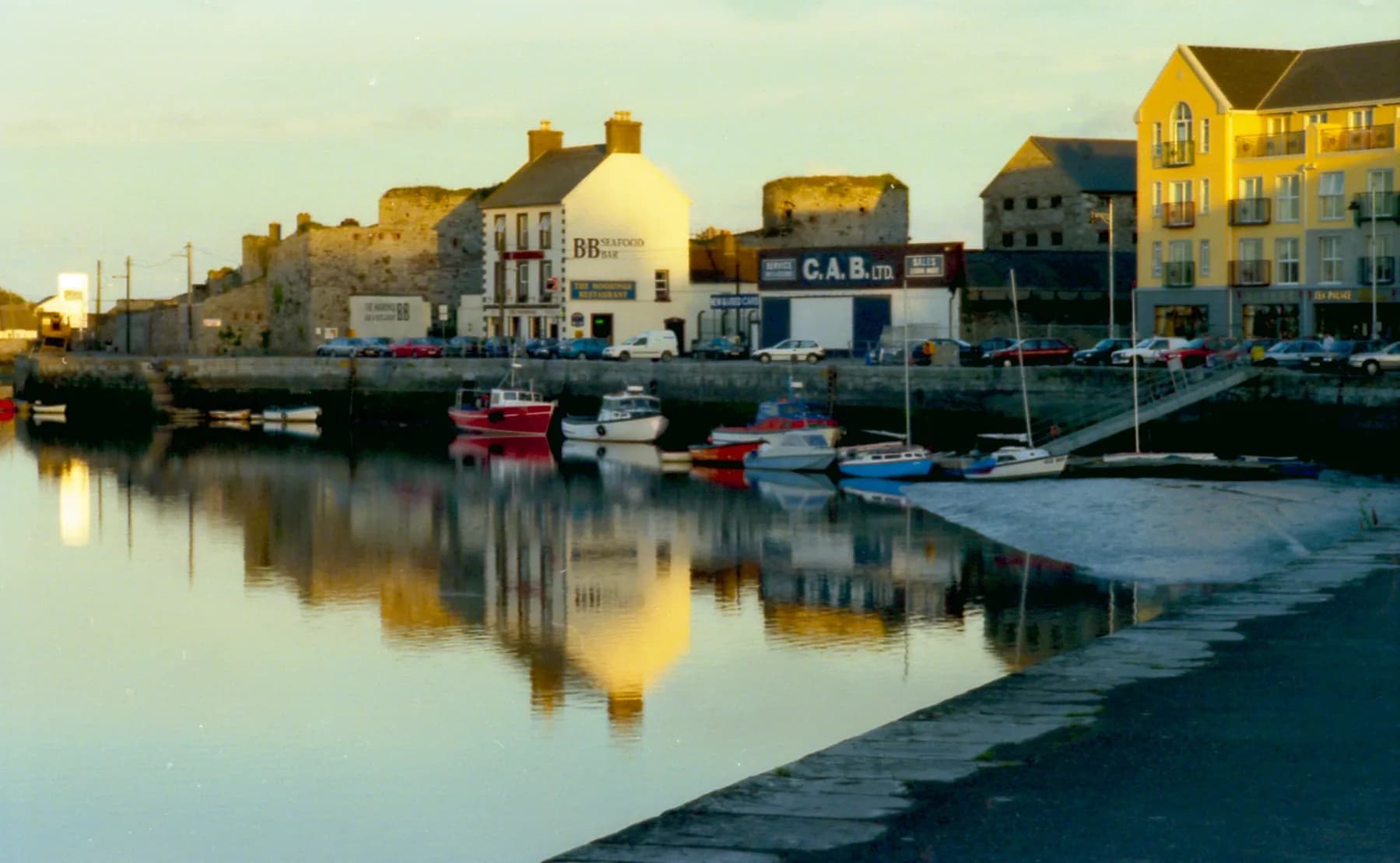
The town takes its shape from its position. King John's castle, an Anglo-Norman fortification founded in the 1180s, sits at the end of Castle Street where the Colligan meets the bay, built to hold a strategic crossing point. It is run today by the OPW, with free entry and free guided tours roughly between May and September. The castle is small but the guides are good, and it gives the long view of why anyone bothered fortifying this particular bend of coast in the first place. From its walls you can see across to the Cunnigar and out toward An Rinn.
The Déise and Grattan Square
Waterford and its people are known across Ireland as the Déise, pronounced roughly DAY-sha, an old territorial name that still turns up on county jerseys and pub signs. Dungarvan has been the administrative heart of west Waterford for a long time, and its centrepiece is Grattan Square, a large planned Georgian market square laid out in the early nineteenth century and named for the statesman Henry Grattan. It is painted in the confident reds and yellows and blues that Irish market towns do well, ringed by independent shops, and it still does its original job: the farmers market fills it every Thursday morning, roughly 9:30 to 14:00, and once a year it becomes the main stage of the Waterford Festival of Food.
From Railway to Greenway
The single biggest change to Dungarvan in the last decade arrived on an old railway line. The Waterford and Dungarvan railway closed in the twentieth century, and in 2017 the route reopened as the 46 km Waterford Greenway, with Dungarvan as its western terminus. It brought cyclists and walkers in numbers, and the town was ready for them. The trail runs east along the bay and then inland through the Durrow tunnel and over a string of viaducts, including the Ballyvoyle viaduct, which was blown up during the Civil War in the 1920s and later rebuilt.
A Town That Eats Well
Dungarvan eats far better than a harbour town of its size has any right to, and most of the credit traces to the Tannery, opened by chef Paul Flynn and his wife Máire in 1997, which put the town on the national food map and trained a generation of cooks. The year 2026 is its final full year as a restaurant before it continues as a townhouse and cookery school. Around it sit pubs serving proper food, the Dungarvan Brewing Company, the Thursday market, and a calendar that peaks each April with the food festival. Eleven kilometres south-west, across the bay, sits An Rinn, one of the country's smallest Gaeltacht areas, where Irish is still the everyday language and Coláiste na Rinne has been teaching it since 1909.
Wildlife & Nature
Birdlife
Wading birds
Dungarvan Bay and the Cunnigar are an important site for waders and wildfowl, with large numbers using the mudflats and oyster beds exposed at low tide. Bring binoculars and walk the bay side of the Cunnigar.
Autumn - winter