About Cobh
The history, geography, and character of Cobh.
History & Heritage
The Cove of Cork
Cobh is the Irish spelling of Cove, and it is said the same way. The town began as a small fishing settlement called the Cove of Cork on the sheltered south shore of Great Island, inside one of the largest natural harbours in the world. The Napoleonic wars turned the harbour into a major naval anchorage, and through the nineteenth century the town grew into the transatlantic port that made its name. It was renamed Queenstown in 1849 to mark a visit by Queen Victoria, and changed back to an Irish form, Cobh, by a council vote in 1920 during the War of Independence.
The Emigration Port
More people left Ireland through this harbour than through any other. The Famine coffin ships sailed from here in the 1840s, and the steamers that followed carried something like two and a half million emigrants to North America between 1848 and 1950. Annie Moore, a fifteen-year-old from Cobh, was the first immigrant processed through Ellis Island when it opened on the first of January 1892, and her statue stands by the old railway station with her two younger brothers. The Cobh Heritage Centre, in that same station, tells the whole story as the Queenstown Story.
The Titanic and the Lusitania
Queenstown was the Titanic's final port of call. On 11 April 1912 she anchored off the harbour, too large for the quay, and 123 passengers were rowed out to her by tender from the White Star Line office on Casement Square. Most were third-class emigrants. Three years later, on 7 May 1915, the Lusitania was torpedoed by a German submarine off the Old Head of Kinsale, with the loss of 1,197 lives. The survivors and many of the dead were brought in to Queenstown, and a mass funeral was held above the town on 10 May; the victims lie in communal graves in the Old Church Cemetery. Both stories are told soberly here, as the bereavements they were.
The Cathedral and the Carillon
St Colman's Cathedral stands over the whole town, a French Gothic cathedral of grey limestone whose spire is the tallest in Ireland. It was begun in 1868 and not finished until 1915, and it holds the only carillon in Ireland and the largest in Ireland or Britain, 49 cast-bronze bells weighing more than 25 tons, played from a keyboard in the tower. From May to September the carillon is played in a recital across the harbour on Sunday afternoons, and the sound carries down over the painted houses and the water.
The Harbour Today
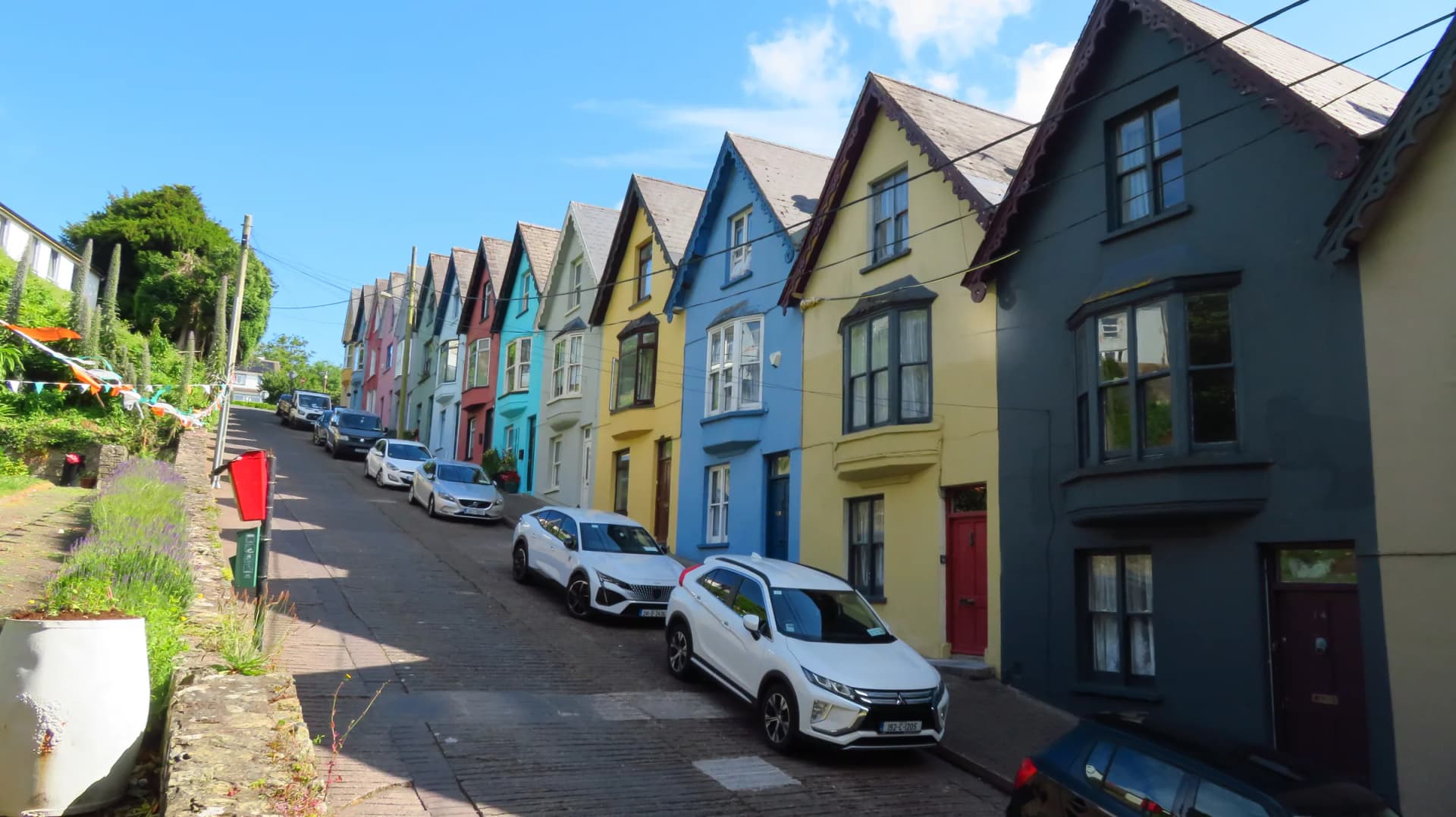
The harbour that made Cobh a naval and emigration port now makes it a cruise port; it has Ireland's only dedicated cruise terminal, and the deepwater quay takes a heavy schedule of ships from spring to autumn. Spike Island, the old prison-fortress out in the middle of the harbour, runs a ferry from Kennedy Pier and has been named Europe's leading tourist attraction. The town itself is small enough to walk, steep enough to test you, and honest about a history that was, for most of the people who passed through it, a leaving.
Wildlife & Nature
Marine Life
Harbour and grey seals
Seals are regular in Cork Harbour and are sometimes seen from the waterfront, the Spike Island ferry and the harbour boat trips. The large sheltered harbour suits them.
Year-round
Birdlife
Harbour seabirds
Cormorants, gulls, terns and waders work the harbour and the mudflats around Great Island, with the sheltered water and the islands giving them feeding and roosting ground.
Year-round